
Branding, Marketing, Publishing
Author Branding in 2026: Book Covers, Websites & Social Media That Supports Your Author Platform
Author Branding in 2026: What Actually Works
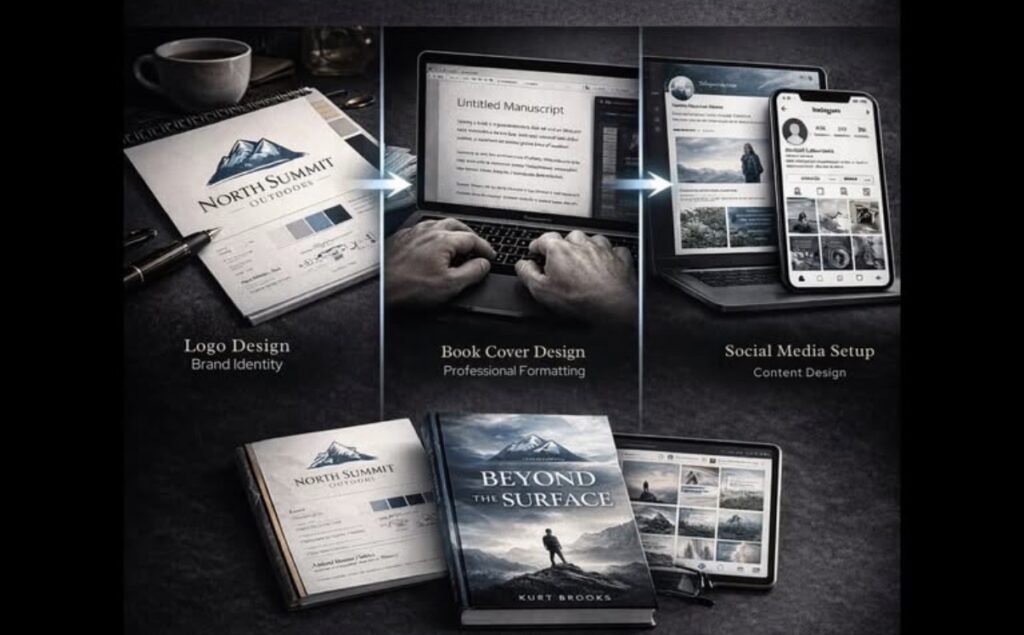
Author branding in 2026 is no longer optional. It’s the difference between being discovered and being ignored. Readers discover most books on digital platforms. In crowded online stores and social feeds, authors need more than great writing: they need a polished brand that catches attention at a glance and builds long-term trust. Three pillars determine how readers perceive that brand:
- Book cover design. Covers are a book’s first signal; they must “stop the scroll” on retail sites or social feeds and convey genre and tone instantly. Publishers and self‑published authors alike are refining proven design practices rather than inventing new ones. Typography dominates covers in 2026, and colour contrast, white space and dual‑scale thinking ensure readability on thumbnails and in print. Human‑driven craft is returning as a counter‑trend to AI‑generated art.
- Author websites. A website is your digital headquarters. The best sites showcase the book cover, author headshot, blurbs, trailers, buy buttons and excerpts. Modern author sites can use email capture, e-commerce, analytics and blog content to nurture relationships and support discovery. Responsive design and clear navigation are no longer optional, because readers expect a seamless mobile experience and frictionless purchase paths.
- Social media presence. Algorithms reward authors who engage authentically, deliver useful or entertaining content and use platform features strategically. Short‑form videos on Instagram Reels or TikTok, community engagement, authenticity and social SEO are dominating in 2026. E‑commerce tools are now embedded in platforms like TikTok and Instagram, and real faces (not avatars) are preferred.
This guide distils current research, competitor analysis and best practices to help authors design marketable covers, build professional author websites and grow their presence on Facebook, Instagram and LinkedIn. It concludes with a comparison of top marketing services and an overview of how Be My Tech can support your author brand.
Book cover design trends and strategies for 2026
Oversized, expressive typography
Cover designers are using typography as the primary visual element, often letting titles occupy 70 to 80% of the cover. This trend serves a practical purpose: readers first encounter covers as tiny thumbnails on phone screens, and large, high-contrast type survives better than intricate imagery. The Troubador Publishing report describes typography as “the main visual element” that helps covers stand out on Amazon, Goodreads and social media feeds. Designers mix serif and sans-serif fonts, distort or warp text and incorporate textures, shadows or 3D effects to convey genre and mood.
High contrast colours and minimalism
Flat, low‑contrast covers struggle to survive thumbnail compression. Strong colour contrast communicates emotion faster than imagery and improves ad performance. Bright, saturated colours and jewel tones now appear even in traditionally dark genres, while minimal white backgrounds are being used to remove visual noise and force focus on a single graphic element. Troubador’s research notes that designers are pairing bold colours with geometric shapes or frames to guide the eye and create balance. These techniques help covers read instantly both online and in print.
Designing for multiple sizes
Dual‑scale thinking is no longer optional: a cover must capture attention at thumbnail size and reward readers who pick up the physical book. Effective designs separate structure (large shapes, clear hierarchy) from detail (texture, embossing, foil). Without this separation, covers either get lost in digital listings or appear bland when printed.
AI as a tool, not the designer
Artificial intelligence can now generate covers quickly and cheaply, but its tendency to include every character and plot point often produces cluttered, generic designs. Successful designers use AI to create background elements or explore variations, then refine the concept manually. Readers should never notice the process, only the immediate message. Troubador sees similar pushback: AI is common but authenticity and creative balance are celebrated, and human-driven artwork and hand-rendered textures are making a comeback.
Return of hand‑crafted art and mixed media
There is a deliberate shift away from hyper-polished photographic realism toward art that feels “made”. Painted styles, textured digital paintings, collage, hand-drawn elements and calligraphy convey mood without locking readers into a literal interpretation. Publuu’s trend report highlights nature-inspired covers with earthy colours and organic shapes, AI art with a human touch, handwritten typography and mixed-media collages that combine photos and textures. Bold minimalism, meaning one strong visual element paired with a large title, remains effective for digital discovery.
Design takeaways
For authors commissioning a cover or creating one themselves, these trends translate into actionable guidelines:
- Prioritise readability. Use large, high‑contrast typography that signals genre quickly and scales down well.
- Use colour deliberately. Pair saturated colours with deep shadows or white space for clarity; avoid muddy palettes.
- Think in layers. Build a strong structural concept first, then add texture and detail that reward closer inspection.
- Use AI judiciously. AI can help generate textures or explore ideas, but rely on human judgement to refine and simplify.
- Embrace human craft. Hand‑drawn elements, painterly textures and collage give covers a unique, authentic feel.
Building an effective author website
Core elements of successful author sites
Book publicist Scott Lorenz stresses that an author website should provide everything a reader or media contact wants in one place. Essential components include the book cover, author headshot, blurbs from reviewers, a book trailer, buy buttons, excerpts or quotes, media clips, awards, a backlist of books and a sign‑up form for your mailing list. These elements build credibility and make it easy for visitors to purchase or share your work.
Once the author platform is ready, use this book marketing guide to connect the site, reader path, and promotion plan.
Author‑friendly website builders
Many authors use platform‑based builders rather than bespoke development. A 2026 comparison found that the top builders offer:
- Customizable templates. Builders like Wix provide 15+ author templates and an AI‑guided website creator. Squarespace offers elegant templates with book promotion tools, email marketing and built‑in SEO. Hostinger uses simple editors and AI tools to speed up site building.
- Blogging and email capture. Integrated blogs keep readers engaged between releases and can be organized by categories and tags. Email list tools make it simple to collect addresses and promote future releases.
- E‑commerce and marketing tools. Linking Amazon listings or adding online stores allows authors to sell books, courses or merchandise directly. Built‑in SEO tools and social sharing features help new readers find the site.
While these DIY platforms offer speed and affordability, they may lack the strategic depth, clear calls to action, sensible user journeys, and appropriate automation where useful. Most authors struggle because they don’t understand how author branding in 2026 actually works across platforms.
Observations from top author websites
Lorenz’s review of exemplary author sites reveals common design strategies:
- Clear branding. Websites feature the latest book cover prominently, with high‑quality author photos and consistent colour palettes.
- Easy navigation. Key pages (books, bio, media and events) are one click away, and buy buttons are always visible.
- Credibility signals. Testimonials, media logos and award badges establish trust.
- Funnel building. Sites include newsletter sign‑ups, free download offers or invitations to join communities, helping authors nurture readers over time.
Competitor landscape
Authors seeking professional help have an array of book marketing services and agencies to choose from. A 2026 guide highlights ten prominent options:
| Service | Strengths | Limitations |
|---|---|---|
| Writers of the West | Offers personalized, strategy‑first marketing plans focusing on author positioning and brand clarity. | Not suited for quick, low‑budget promo blasts. |
| Reedsy | Curated marketplace of vetted marketers and publicists; authors hire specific experts. | Quality varies by freelancer and requires the author to manage timelines. |
| BookBub | Massive, engaged reader audience and scalable ad platform. | Promotions can be expensive and require strong covers and metadata to succeed. |
| Written Word Media | Runs deal‑focused promotions like Freebooksy and Bargain Booksy for quick traction. | Results are temporary without follow‑up funnels. |
| Kindlepreneur | Provides data‑driven research on promo sites, ad strategies and keyword optimization. | Does not execute campaigns; authors must invest time to learn and implement. |
| StoryOrigin | Excellent for building email lists through newsletter swaps and reader magnets. | Growth is gradual and requires consistent email marketing. |
| BookSprout | Manages advance reader copy (ARC) teams and review collection. | Limited impact beyond the launch phase. |
| Smith Publicity | Secures podcast bookings, interviews and traditional media exposure. | High fees and media exposure do not always translate directly to sales. |
| Author Marketing Experts | Offers blended marketing and publicity with educational support. | Designed for long‑term growth, not rapid, high‑volume launches. |
| Scribe Media | Provides premium launch infrastructure, including funnels and publicity support. | Premium pricing makes it less accessible to budget‑conscious authors. |
These services cater to different budgets and goals. Notably, most focus on marketing campaigns rather than the integrated design, website and automation systems that Be My Tech provides.
Social media strategies for authors
Focus on short‑form video and community engagement
Short‑form videos on Instagram Reels and TikTok remain the most actively engaged format. Authors can use quick tips, character introductions or micro‑scenes to maintain a presence and attract new readers. Community‑building is more valuable than follower counts: commenting, sharing, saving and messaging weigh more heavily in platform algorithms. Authors should reply to comments, host live sessions or Q&As and participate in reader challenges.
Authenticity and values‑driven storytelling
Audiences respond to real voices and meaningful content. Behind‑the‑scenes posts, favourite books, writing tools and personal interests create connection. Mental‑health conversations and value‑driven storytelling resonate and differentiate an author’s brand.
Niche communities and social SEO
Bookstagram and BookTok communities remain strong, but authors must actively participate: join reading challenges, comment on other creators’ posts and use relevant hashtags and keywords. Cross-platform engagement is essential, so adjust copy and format for each platform and repost content strategically. Social SEO involves using keywords in captions, bios and on-screen text; studying how comparable authors position their keywords and hashtags helps refine your own strategy.
Emerging platform trends
According to social media strategist Lacy Phillips, several broader trends will affect authors:
- Integrated e‑commerce. Social platforms are rolling out built‑in shopping tools, meaning authors can sell books directly through TikTok or Instagram. External links are becoming less viable, so adapt to on‑platform purchase options.
- User‑tuned feeds. Platforms allow users to customise their algorithmic interests. Authors should post about a range of topics (not just writing) to reach new audiences.
- Keyword‑rich captions. Instagram is limiting hashtags and emphasising keywords and alt text. Use descriptive alt text and embed keywords naturally in captions.
- Pinterest resurgence. Pinterest has regained growth, especially for brands selling physical products; using keyword‑heavy boards and product pins can help authors surface visual content and book-related material to relevant audiences over time.
- Long‑form video and YouTube. TikTok has introduced videos of 10 to 60 minutes, and YouTube is gaining momentum as streaming fatigue sets in. Authors who enjoy speaking or teaching can create longer videos, interviews or webinars.
- Return to real faces. Digital avatars and AI‑generated presenters are declining; audiences prefer seeing real authors on camera.
LinkedIn for thought leadership
LinkedIn is no longer just for job seekers; it can support professional visibility, media credibility, and relevant network discovery for authors. Rob YB Youngblood recommends treating LinkedIn as a billboard:
- Optimise your profile. Use a banner image featuring your book cover and update your headline to mention your author status.
- Use the “Featured” section. Showcase pictures of people holding your book to boost visibility and social proof.
- Tell your story. In the “About” section, position yourself as an expert by summarising your book’s themes and your professional journey. Incorporate your books into your experience section.
- Build relationships. Focus on meaningful connections rather than broadcast posts; endorsements and testimonials from credible contacts increase trust.
SEO‑friendly keywords and topics
Including relevant search terms in your blog posts, website copy and social media captions helps readers find your content. The following table groups trending phrases by topic for 2026. Avoid stuffing all keywords into one paragraph; use them naturally in headings, sub‑headings and meta descriptions.
| Topic | Example keywords and phrases |
|---|---|
| Book cover design | book cover design trends 2026, oversized typography covers, bold minimalism book covers, AI book cover design, hand‑painted book cover art, nature‑inspired book covers, high‑contrast cover colours |
| Author websites | author website design 2026, best author website builder, custom author website services, book landing page ideas, author blog strategy, email list for authors, responsive author site design |
| Author branding & marketing | author brand strategy, author platform development, book marketing services 2026, self‑publishing marketing tools, author funnel system, book launch plan, author publicity agency |
| Social media marketing | social media for authors 2026, Instagram reels for writers, TikTok for authors, BookTok trends 2026, Bookstagram tips, LinkedIn strategies for authors, social SEO for writers |
How Be My Tech supports authors
Be My Tech does not build websites, design covers, or manage social media as packaged services. Our current work is a written, context-based recommendation for your author platform and book positioning: a three-minute fit check, with no manuscript upload and no sales call required. You receive the written recommendation first, and a paid engagement is considered only if it fits your stage, goals, and scope.
Start the Author Intake Review →
Closing thoughts
Establishing a successful author brand in 2026 requires more than a well‑written book. Thoughtful cover design, an engaging website and an authentic social media presence work together to build visibility, trust, and a stronger professional presence. Trends point towards oversized typography, strong colour contrast, human‑crafted art and dual‑scale design for covers; mobile‑optimized, professional author websites with clear information architecture, calls to action, and appropriate marketing integrations; and community‑oriented, authentic content on social media platforms.
This article is educational. If you want a second opinion on how your specific platform and book stack up, see how Be My Tech reviews author and book positioning.