
Book Writing and Publishing
What Literary Agent Query Responses Can and Can’t Tell You
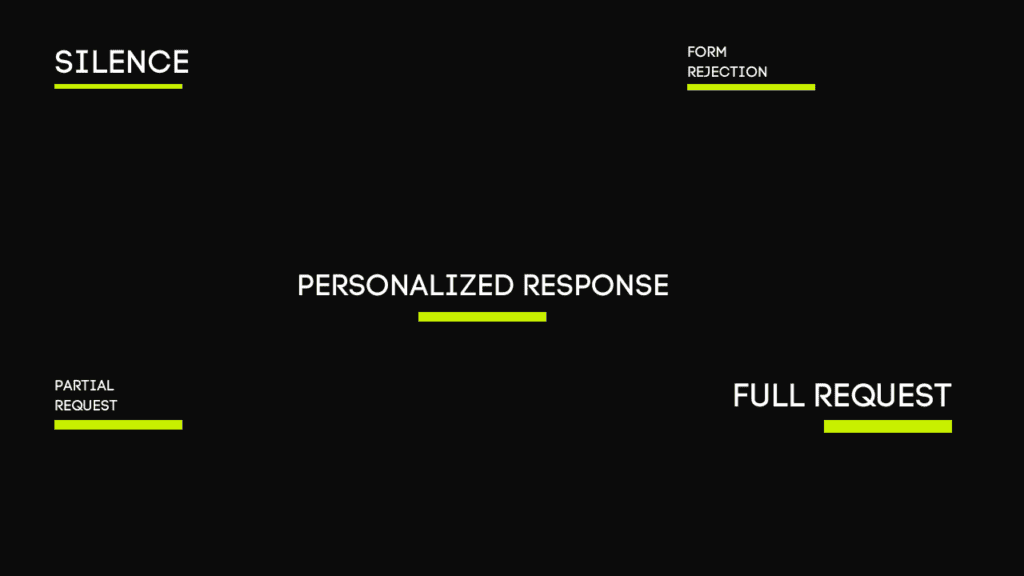
One query response rarely tells you what’s wrong with your submission. A single form rejection, a stretch of silence or even a full-manuscript pass can have several different explanations, including ones that have nothing to do with your writing. Patterns across a meaningful, well-targeted batch of queries are more informative than any single outcome, but even then, agent policy, subjective taste, timing and current list needs all shape what you’re seeing. Before you decide whether to revise your query, your opening pages or your manuscript, it helps to know how much information each type of response actually contains, and what it doesn’t prove.
Before You Interpret Silence, Check the Agent’s Rules
Response practices vary by agent and agency, and you have to check them before silence means anything at all. There’s no universal response window, so use the individual agent’s or agency’s current submission policy and stated follow-up rules. Agent-specific policy always governs over any general guidance. Many agents publish an explicit “no response means no” policy with a window they set themselves. Some agencies respond to every query regardless of outcome. Some allow a polite status-check nudge after their stated window, and others ask explicitly that you don’t. Before treating silence as a signal at all:
- Re-check the specific agent’s current submission guidelines (many are updated without notice).
- Confirm whether the agency has a stated “no response means no” policy.
- Note the agency’s stated average response time, if published.
- Check whether a status-check nudge is invited, and after what interval.
- Confirm your query actually reached the correct inbox/format (some agencies reject queries automatically for format non-compliance without it reflecting on content at all).
If an agent’s policy is silence-as-rejection, then silence is procedurally expected. It isn’t diagnostic information about your query or manuscript.
A Query Response Is a Signal, Not a Diagnosis
No response type, including a full-manuscript pass, proves a defect in your manuscript on its own. Agents decline projects for reasons that have nothing to do with quality: they may already represent something similar, their list may be full for your genre, the timing may not fit their current focus, or the project simply isn’t the right subjective fit for that individual reader. The framework below separates “what happened” from “what it might mean” from “what it doesn’t prove,” and it’s explicit about how much weight each signal carries before you act on it.
How to Interpret Different Query Outcomes
Each outcome below is treated separately, because they are operationally different events with different amounts of information.
No response to query
- How much information it contains: Very low, in isolation.
- What to check first: The agent’s current stated response policy and window; whether “no response means no” applies; whether the window has actually elapsed.
- Possible interpretations: Policy-driven non-response; a full inbox; the query was deprioritized against current list needs; a technical/delivery issue.
- What it does not prove: That your query letter, premise, or manuscript has a specific flaw.
- Evidence to collect: Whether this is an isolated case or a repeated pattern across multiple well-targeted, policy-compliant queries sent within a similar window.
- What to review next: Nothing yet, if isolated. If repeated across a meaningful batch, review query targeting and query-letter clarity before anything else.
- When to continue querying: Isolated non-response after a policy-compliant wait is not a reason to pause.
- When a revision review may be reasonable: Only after a repeated pattern across multiple genuinely well-targeted agents, and only after ruling out policy-driven silence.
Form rejection
- How much information it contains: Very low, in isolation; low-to-medium if repeated.
- What to check first: Whether the query was well-targeted to that specific agent’s stated interests, and whether the query package met their exact submission requirements.
- Possible interpretations: Genre/list mismatch; current capacity; a query that didn’t clearly communicate the hook; a subjective pass unrelated to execution quality.
- What it does not prove: That the manuscript itself has a problem. A form rejection gives no information about pages the agent may not have read closely, or read at all.
- Evidence to collect: Whether form rejections are concentrated among poorly-targeted agents (a targeting issue) or spread evenly across well-matched, well-researched agents (a possible query-package issue).
- What to review next: Query targeting first, then query-letter clarity, and not the manuscript.
- When to continue querying: A handful of form rejections from a well-targeted list is a normal, expected part of the process.
- When a revision review may be reasonable: After a meaningful run of form rejections concentrated among agents who were genuinely good fits, suggesting the query package itself may not be communicating the project clearly.
Personalized rejection
- How much information it contains: Medium. It’s more than a form rejection because it reflects individual reader engagement, but it’s still one reader’s subjective response.
- What to check first: Whether the note references something specific and actionable, or is a general encouragement without detail.
- Possible interpretations: A specific, recurring observation across multiple personalized notes; a single reader’s individual taste; feedback on the opening pages specifically rather than the full manuscript.
- What it does not prove: That a single reader’s specific note reflects a broader problem. One personalized comment is one data point.
- Evidence to collect: Whether similar, specific observations appear in more than one personalized rejection.
- What to review next: The specific element referenced, if it recurs across more than one note. That’s most often the opening pages, since that’s usually all a query-stage read covers.
- When to continue querying: A single personalized rejection, even a detailed one, does not by itself justify pausing.
- When a revision review may be reasonable: When the same specific observation appears independently in more than one personalized rejection.
Partial request
- How much information it contains: Medium. The submission generated enough interest for the agent to request more material.
- What to check first: How much material was requested and how long ago, and what material the agent had already seen (a query letter alone, versus a query plus sample pages).
- Possible interpretations: The submitted material generated enough interest for the agent to want to see more; what this tells you depends partly on what was already seen before the request.
- What it does not prove: That the rest of the manuscript is ready. A partial request is a positive signal about the material already reviewed, and only that.
- Evidence to collect: Whether partial requests convert to passes at a similar point in the manuscript across more than one agent.
- What to review next: Nothing, while the request is pending.
- When to continue querying: Continuing to query in parallel while a partial request is outstanding is standard practice.
- When a revision review may be reasonable: Not applicable while pending.
Partial request, then rejection
- How much information it contains: Medium. It’s more informative than a form rejection because material beyond the initial submission was read and didn’t sustain interest.
- What to check first: Whether any feedback was offered, and whether it points to something specific rather than a general pass.
- Possible interpretations: The agent considered the additional material and decided not to continue. Possible explanations include manuscript execution, positioning or market considerations, subjective fit, or timing and list needs. Only attribute this to a specific point in the manuscript if the agent actually supplied specific evidence.
- What it does not prove: That this is a manuscript-wide problem. It may be isolated to the specific pages read, or specific to that reader’s taste.
- Evidence to collect: Whether a similar explanation, when the agent provides one, repeats across more than one partial-then-pass.
- What to review next: The specific element identified, if the agent’s feedback recurs across more than one instance and identifies something specific.
- When to continue querying: A single partial-then-pass is not unusual and doesn’t require pausing.
- When a revision review may be reasonable: When the same specific, substantive observation recurs across multiple partial requests from different agents.
Full manuscript request
- How much information it contains: Medium-high signal that the concept and submitted material are working; not yet informative about the full manuscript’s reception.
- What to check first: Nothing to check yet, because this is a positive signal in itself.
- Possible interpretations: The query and sample material generated real interest in seeing the complete project.
- What it does not prove: That the manuscript will be offered representation. A full request means the agent wants to read the complete project before deciding whether to continue the conversation.
- Evidence to collect: N/A while pending.
- What to review next: Nothing, while pending.
- When to continue querying: Continuing to query other well-targeted agents in parallel remains standard, unless you’ve been asked for an exclusive read.
- When a revision review may be reasonable: Not applicable while pending.
Full request, then rejection
- How much information it contains: Potentially higher than earlier-stage signals, but still not proof, since this reflects one full read by one person.
- What to check first: Whether any feedback was offered and, critically, whether similar feedback has appeared from more than one full-manuscript read.
- Possible interpretations: A specific, recurring structural or execution issue; a market-positioning concern (e.g., “I don’t know how to place this”); a subjective connection that didn’t fully form despite genuine interest in the concept; timing or list-capacity reasons unrelated to the manuscript.
- What it does not prove: That the manuscript has a defined, fixable problem. One full read, even a considered one, is one perspective, and agents’ feedback (when given at all) is often brief and non-exhaustive.
- Evidence to collect: Whether the same specific observation (not just “didn’t connect”) appears independently across more than one full-request rejection.
- What to review next: The specific, recurring element, but only if it appears more than once. Otherwise, continue querying. One full-request pass, even with feedback, is not a manuscript-wide verdict.
- When to continue querying: A single full-request pass, even with detailed feedback, is not on its own a reason to stop querying or to substantially revise.
- When a revision review may be reasonable: When the same specific, substantive observation recurs across multiple full-request rejections from agents who were genuinely well-matched.
Full request, then silence
- How much information it contains: Treated separately from a rejection, because this is an open, unresolved status and not a negative outcome.
- What to check first: The agency’s stated response window for full manuscripts specifically (often longer than the query-stage window), and whether a status-check nudge is appropriate at this stage.
- Possible interpretations: The status is unresolved. The manuscript may still be pending, delayed, or no longer actively moving, but silence alone does not tell you which.
- What it does not prove: Anything about quality. An unresolved full request isn’t equivalent to a rejection and shouldn’t be treated as one.
- Evidence to collect: The agency’s stated full-manuscript response and follow-up policy before assuming anything.
- What to review next: Nothing. Follow the agency’s stated policy for requested-material follow-up, since this is a pending status and not a signal to act on.
- When to continue querying: Continuing to query elsewhere in parallel remains appropriate unless an exclusive was explicitly granted.
- When a revision review may be reasonable: Not applicable while genuinely pending; only becomes relevant if the file is later formally declined.
Look for Patterns, Not Individual Rejections
One outcome of any type is weak evidence on its own. What’s more informative is a pattern across a meaningful set of well-targeted queries: sent to agents who plausibly represent the genre and category, submitted according to each agency’s actual guidelines, and within their stated response windows. A cluster of similar outcomes across a poorly targeted batch mostly tells you about targeting, not about the manuscript. There’s no universal “right” sample size before a pattern becomes meaningful. That threshold depends on how well targeted the batch was to begin with, which is itself worth reviewing before you assume the pattern is about the manuscript at all.
Is It the Query, the Opening Pages, or the Manuscript?
Different response types point toward different layers, if a genuine pattern exists:
- Query targeting, if outcomes are worse specifically among poorly researched or borderline-fit agents.
- Query package (letter or pitch), if well-targeted agents consistently form-reject without requesting pages.
- Opening pages or requested material, if requests consistently stall at a similar point.
- Whole-manuscript execution, if full requests consistently pass with a similar, specific, recurring observation.
- Positioning or market path, if feedback repeatedly centers on “I don’t know how to sell this” rather than craft-specific notes.
These layers are not mutually exclusive, and a pattern can implicate more than one. For no-requests or form passes specifically: targeting, positioning, premise communication, and query-package clarity may deserve review, but a form rejection generally cannot isolate the cause. For requests followed by a pass: material beyond the initial submission may deserve review when specific feedback or repeated patterns converge, while subjective fit and market factors remain possible explanations throughout.
What to Review Before Rewriting Your Manuscript
Before starting a substantial revision based on query responses:
- Confirm the pattern is real and not just one or two data points.
- Confirm the batch was genuinely well-targeted.
- Confirm you’ve accounted for each agency’s specific response policy and timing.
- Identify whether the recurring observation (if any) is specific and consistent, not vague or contradictory across different readers.
- Consider whether the issue is more likely the query, the opening pages, the whole manuscript or positioning. A full manuscript rewrite is a large undertaking to start from an ambiguous signal.
A Practical Decision Checklist
- Have I checked each agent’s actual response policy before treating silence as a signal?
- Is this an isolated outcome, or a pattern across multiple queries?
- Was the batch genuinely well-targeted to begin with?
- If feedback exists, has the same specific observation appeared more than once?
- Am I about to act on one person’s subjective read, or a genuine recurring pattern?
- Do I know which layer (query, opening pages, manuscript, positioning) the pattern actually points to, or am I guessing?
When an Outside Read May Actually Help
If you’ve gathered enough response history to see a genuine pattern but still can’t tell whether the next thing to review is your query package, your opening pages, your manuscript’s readiness, or your broader publishing path, Be My Tech can first review whether its Manuscript & Publishing Readiness Diagnostic is actually the right fit for the decision you’re facing. Explore Authors & Books →
Sources and Further Reading
These resources provide additional context on literary-agent querying and individual submission policies. Agent-specific guidelines should always take precedence over general querying advice.
- Jane Friedman: “Silence: The New Rejection That’s Expanding in Insidious Ways”: a look at the growing practice of non-response as a query outcome, and why it should be checked against each agent’s stated policy rather than assumed.
- Manuscript Wish List: The Comprehensive Search and Query Guide: how to look up an individual agent’s current submission preferences and response practices before querying, which shows how much these vary from agent to agent.
- QueryTracker: Reports and Response-Time Data: how median query and submission response times are tracked for each agent, which is useful general context for judging whether a wait is still within a normal range.
FAQ
Does a full manuscript request mean an agent will offer representation?
No. A full manuscript request is not an offer of representation. It means the agent wants to read the complete project before deciding whether to continue the conversation. A pass at this stage is still one reader’s response, not a verdict on the manuscript.
How long should I wait before assuming no response means rejection?
There is no universal response window. It depends entirely on the individual agent’s or agency’s stated policy, so check the specific agency’s current submission page rather than assuming any general timeline, and follow their stated follow-up rules if you’re unsure whether or when a status-check nudge is appropriate.
Is it ever reasonable to revise after just one rejection?
Generally no. One outcome of any type is weak evidence. A specific, recurring observation across multiple independent responses is a stronger basis for considering revision than a single rejection, even a detailed one.